
The Vagus Nerve: Your Body’s Built‑In Calmer What It Is and How to Soothe It
What the vagus nerve is
The vagus nerve is the longest cranial nerve, running from the brainstem down through the neck and chest to the abdomen. “Vagus” means wandering — it touches the heart, lungs, digestive tract and many organs in between.
Functionally, it’s a key part of the parasympathetic nervous system, the branch that promotes rest, digestion, repair and social engagement. When the vagus nerve is active, your heart rate lowers, breathing slows, digestion improves, and you feel calmer.
Because it connects the brain with the body, the vagus nerve helps regulate emotional state, stress responses, inflammation, and social behavior. Strengthening vagal tone — how responsive this system is — supports resilience to stress and improves mental and physical health.
How stress affects the vagus nerve
During acute stress, the sympathetic nervous system (fight‑or‑flight) dominates and vagal activity decreases. This is normal and short term.
Chronic stress or trauma can blunt vagal tone over time, making it harder to return to calm, increasing anxiety, sleep disturbance, digestion problems, and inflammatory activity.
Intentionally activating the vagus nerve helps flip the switch back toward balance.
Simple, evidence‑based techniques to soothe the vagus nerve are practices you can use in stressful moments. Most are safe, quick, and can be done anywhere.
Breathing techniques
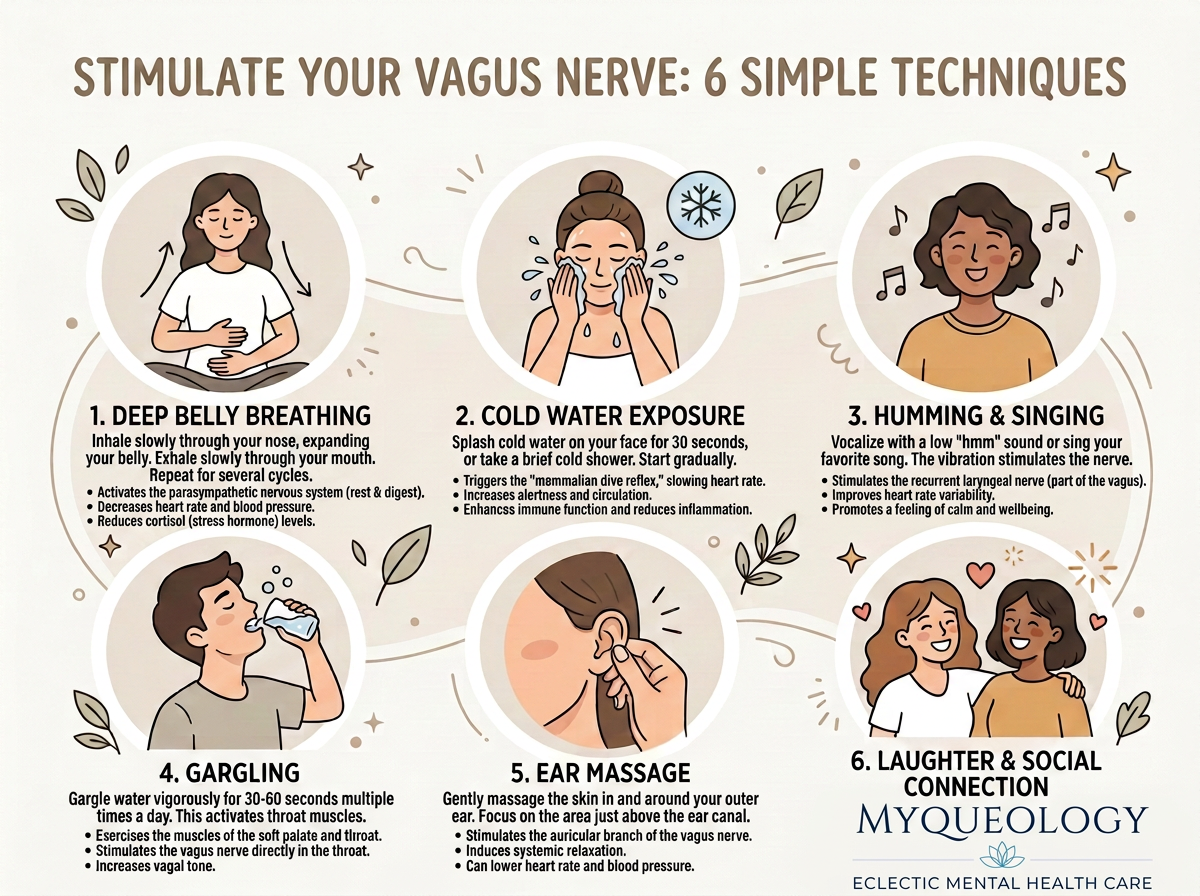
Diaphragmatic (belly) breathing: Inhale slowly through the nose into the belly for 4–6 seconds, pause briefly, exhale slowly for 6–8 seconds. Purposeful longer exhales stimulate the parasympathetic system.
4-6-8 pattern: Inhale 4 counts, hold 6 counts (optional), exhale 8 counts. Repeat 4–6 times. Slower exhalation and extended breath cycles boost vagal tone.
Coherent breathing: Aim for about 5–6 breaths per minute (inhale ~5–6 sec, exhale ~5–6 sec). This rhythm synchronizes heart rate variability and vagal activity.
Vocal and throat stimulation
Humming: Humming engages the vocal cords and the muscles around the larynx, which stimulates vagal pathways. Try 30–60 seconds of low humming or prolonged “mmm” sounds.
Chanting or singing: Any sustained vocalization (singing, chanting) can increase vagal tone — even quietly in your car or shower.
Gargling: Gargling with water activates the muscles in the back of the throat linked to vagal fibers. Gargle for 20–30 seconds a few times.
Cold exposure
Splash cold water on your face or neck: A quick cold stimulus to the face (or submerging the face briefly in cool water) triggers the mammalian “dive reflex,” which lowers heart rate and increases vagal activity.
Cold shower or brief cold exposure: Start with 10–30 second cold splashes or showers at the end of a warm shower. Gradual exposure is safer and more tolerable.
Hold a cold pack against the back of the neck for short periods to produce a calming effect.
Movement and posture
Slow, mindful movement: Gentle yoga, walking, tai chi or qigong with attention to breath can build vagal tone over time.
Stretching and neck mobility: Soft stretches that release tension in the neck and jaw can help.
Social engagement postures: Open chest, relaxed shoulders and a softened facial expression support the “social engagement system” linked to vagal function.
Touch and social connectedness
Safe, comforting touch: Handholding, hugging, or a gentle shoulder massage from a trusted person can stimulate vagal activity. Even petting an animal has calming effects.
Eye contact and soothing conversation: Calming, synchronous social interactions — a warm voice, relaxed eye contact — engage vagal pathways involved in social safety.
Mindfulness and nervous system practices
Body scan or progressive relaxation: Slow attention through the body combined with breathing reduces sympathetic arousal and supports the vagus nerve.
Loving‑kindness or compassion meditation: Practices that produce positive affiliative emotions can enhance vagal tone.
Grounding techniques: Feeling your feet on the floor, noticing sensory details around you, and pairing with slow breathing helps shift you out of reactivity.
Lifestyle habits that support vagal health (longer term)
Adequate sleep: Quality sleep supports autonomic balance.
Regular aerobic exercise: Walking, swimming, cycling or other sustained activity improves heart rate variability and vagal tone.